There is one decision in a commission that people consistently get wrong, and it is not the photograph. It is the size.
The reason is simple enough. A canvas is chosen while looking at a price list, or at a phone screen, where 40 × 60 cm and 90 × 120 cm are both about the size of a thumbnail. It is then hung on a real wall in a real room, where the difference between them is enormous. A painting that felt generous in the abstract can look strangely small once it is up, floating in the middle of a wall with too much space around it and nothing to hold it there.
So it is worth spending ten minutes with a tape measure before the quote, not after the delivery. What follows is how to do that.
Start with the furniture, not the wall
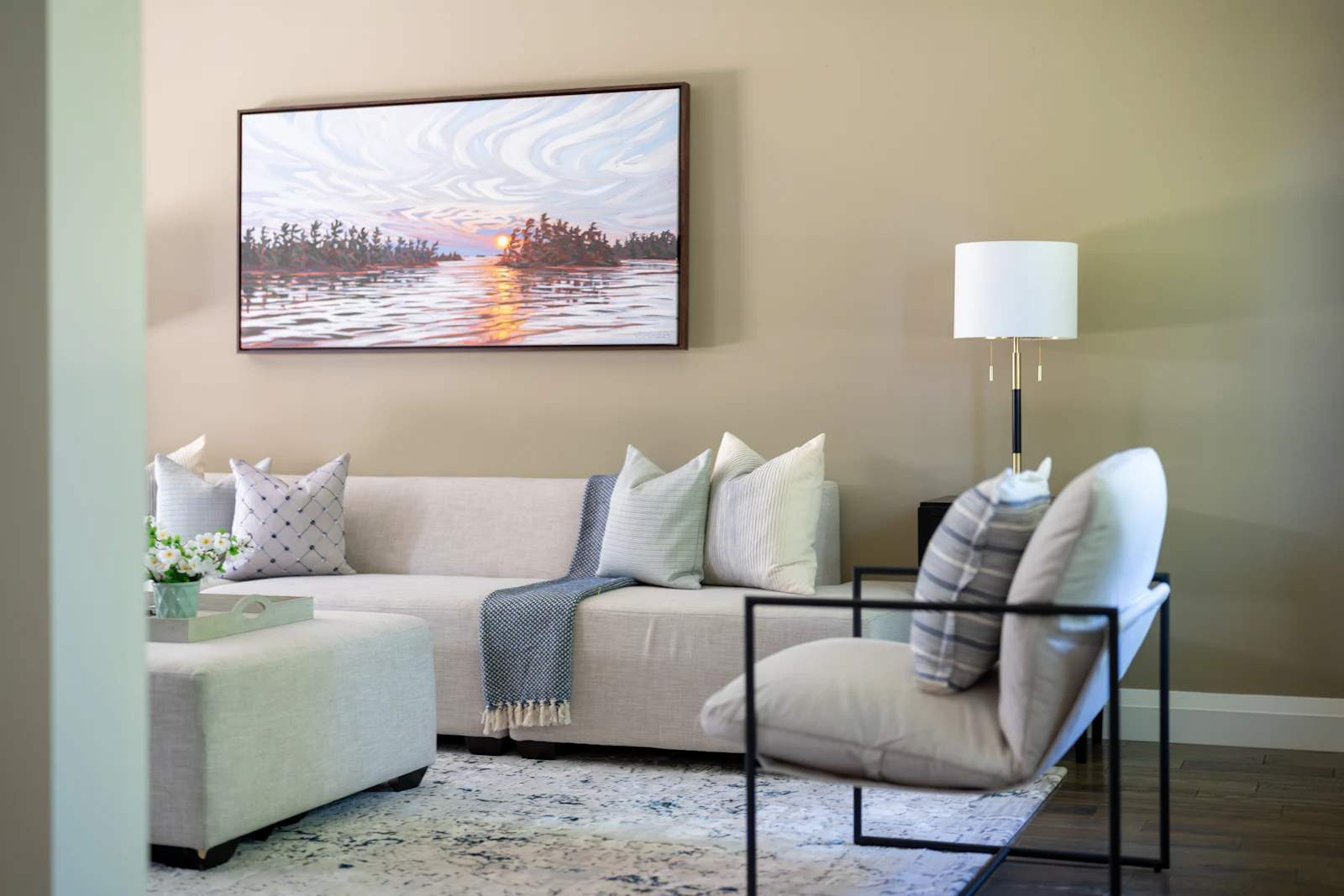
The most reliable proportion rule in the business has nothing to do with the wall's total width. It is this: a work hung above a piece of furniture should span roughly two thirds of that furniture's width.
A three seater sofa is commonly around 200 cm. Two thirds of that is a little over 130 cm, which is why a single canvas of 120 to 140 cm across tends to look right above one and a 60 cm canvas does not. If the wall has no furniture beneath it, an entrance hall or a stair wall, then the wall itself becomes the reference, and the usual advice is to fill somewhere between three fifths and three quarters of the available span rather than centring something modest in a sea of paint.
This is where a portrait commission differs from buying a print off a shelf. If your wall genuinely wants 140 cm of art, that does not have to mean one enormous canvas. A pair hung together, or a diptych composed as a single image across two panels, covers the same span with more grace. That is exactly what the bespoke tier is for.
Then decide how high it hangs
Height is where good paintings are most often let down. The convention galleries use, and the one that almost always looks correct at home, is to hang a work so its centre sits around 145 to 152 cm from the floor. That is roughly average eye level for someone standing. Most people hang art considerably higher than this, out of an instinct to centre it in the empty space above the sofa, and the result is a painting that feels like it is drifting toward the ceiling.
Above furniture the rule adjusts. Leave roughly 15 to 20 cm between the top of the sofa and the bottom edge of the canvas. Less than that and it looks stuck on; much more and the two stop reading as a single arrangement.
One exception matters a great deal here. In a villa majlis or any room with a double height ceiling, eye level is the wrong anchor. The centre is usually lifted well above the standard, closer to 165 to 180 cm, so the piece holds its own against the volume of the room instead of hugging the skirting.
The UAE wall problem
There is a local wrinkle worth naming. A great many homes here, particularly newer apartments, have far less usable wall than their floor area suggests. Floor to ceiling glazing is wonderful for the view and unhelpful for hanging anything, and what solid wall remains is often broken up by doors, the television, or a run of built in joinery.
The practical consequence is that the wall your painting will actually live on is frequently not the one you first picture. It is the entrance wall you pass every day, the dining wall, the length of corridor between the bedrooms, or the space above the console rather than above the sofa. It is worth walking the flat and deciding honestly where the piece will hang before choosing how big it is. A hallway wall that takes a 40 × 60 beautifully will make a 90 × 120 feel like it is being stored there.
The other local reality is that many of us rent. A painting moves with you, which is an argument for choosing the size the piece deserves rather than the size this particular flat allows. Canvases travel well when they are handled properly, and the next wall may be a better one.
The ten minute test that settles it
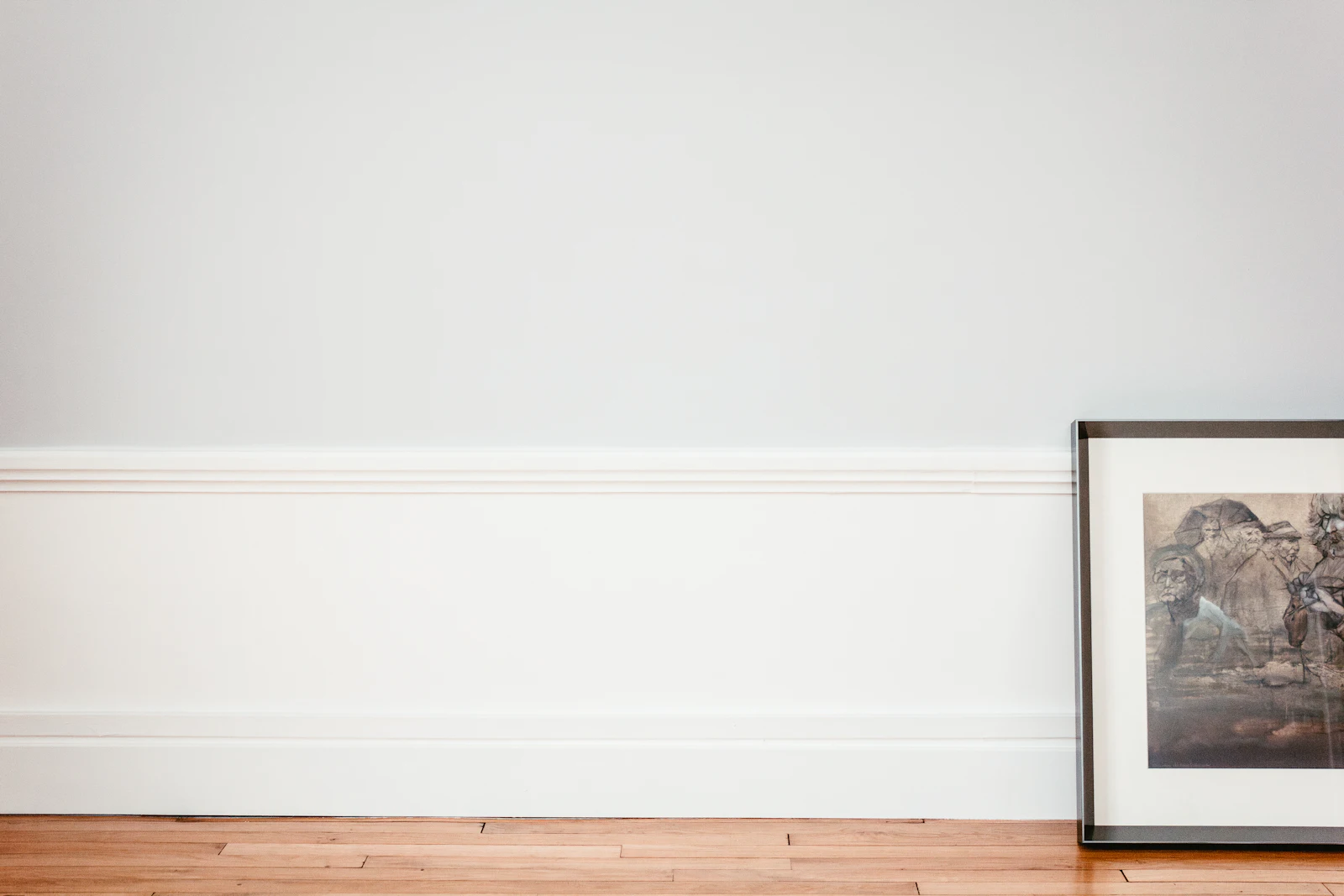
Before you confirm anything, mark the size out on the wall itself. Cut a rectangle of newspaper or wrapping paper to the exact dimensions you are considering, or simply run painter's tape around the outline, and leave it there for a few days.
It sounds almost too simple to bother with, and it is the single most useful thing you can do. Living with the outline for a weekend tells you things a measurement never will: whether it crowds the light switch, whether it sits happily against the curtain line, whether you keep glancing at it and thinking it should be larger. Nine times out of ten, people come back and choose the next size up.
How our three sizes tend to be used
Every commission is quoted individually, but in practice each tier has found its own natural home.
| Tier | Canvas | Where it tends to live |
|---|---|---|
| Intimate | 40 × 60 cm | A hallway, a bedroom wall, a dressing area, or a shelf and picture ledge. Also the size most often chosen as a gift, where the recipient's wall is unknown. |
| Signature | 70 × 90 cm | Our most requested size. Large enough to read properly from across a living room, restrained enough for an apartment. The safe answer when you are unsure. |
| Grand | 90 × 120 cm | The wall the room is arranged around: above a full length sofa, on a double height wall, or facing the entrance so it is the first thing seen. |
| Bespoke | Custom dimensions | Long horizontal walls, diptychs and triptychs, and any wall whose proportions the standard sizes simply do not suit. |
One thing size will not fix
A larger canvas gives a painting presence, but it also gives it scrutiny. More scale means more surface, more detail and more of everything the source photograph contains, which is worth remembering when choosing the image. A soft, low resolution phone photo can make a wonderful intimate piece and struggle at a metre and a half across. That balance between the size you want and the photograph you have is one of the first things we discuss, and it is covered in more depth in how to choose the photograph to turn into a painting.
Once the size is settled, the timeline follows from it, since a larger canvas takes longer to build up. We set that out in when to commission your portrait. And if you are still weighing a painting against a print at all, the honest comparison is here. The current sizes and what each tier includes are on the commissions page.
Questions we are actually asked
How high should a portrait painting be hung?
The gallery convention is to hang a work so that its centre sits around 145 to 152 cm from the floor, which is roughly average eye level. Above a sofa or a console the rule changes slightly: leave about 15 to 20 cm between the top of the furniture and the bottom of the canvas, so the two read as one arrangement. In a room with a double height ceiling, such as a majlis, the centre is usually raised so the piece does not look anchored too low.
What size canvas suits a wall above a sofa?
A reliable starting point is that the artwork should span roughly two thirds of the width of the furniture beneath it. A three seater sofa of about 200 cm therefore sits comfortably under a piece in the region of 120 to 140 cm wide, whether that is one large canvas hung landscape or a pair hung together. Anything much narrower tends to look marooned on the wall.
Can we change the size after commissioning?
Only before the painting begins. A canvas is stretched and composed for its own dimensions, so changing the size once work has started means starting again rather than adjusting. This is why we encourage couples to measure the wall before confirming, and why the size conversation happens at the quote stage.
Send us the wall
A photograph of the space and a rough measurement is all we need. We will tell you which size the wall is asking for, even if it is not the one you expected.