It is one of the more sensible questions a client can ask, and we would rather answer it properly than wave it away: will a canvas actually survive out here?
The short answer is yes, comfortably, and for longer than any of us. The longer answer is that of the three things people worry about, only one is a genuine threat, one is largely handled for you already, and the third is something almost nobody thinks of.
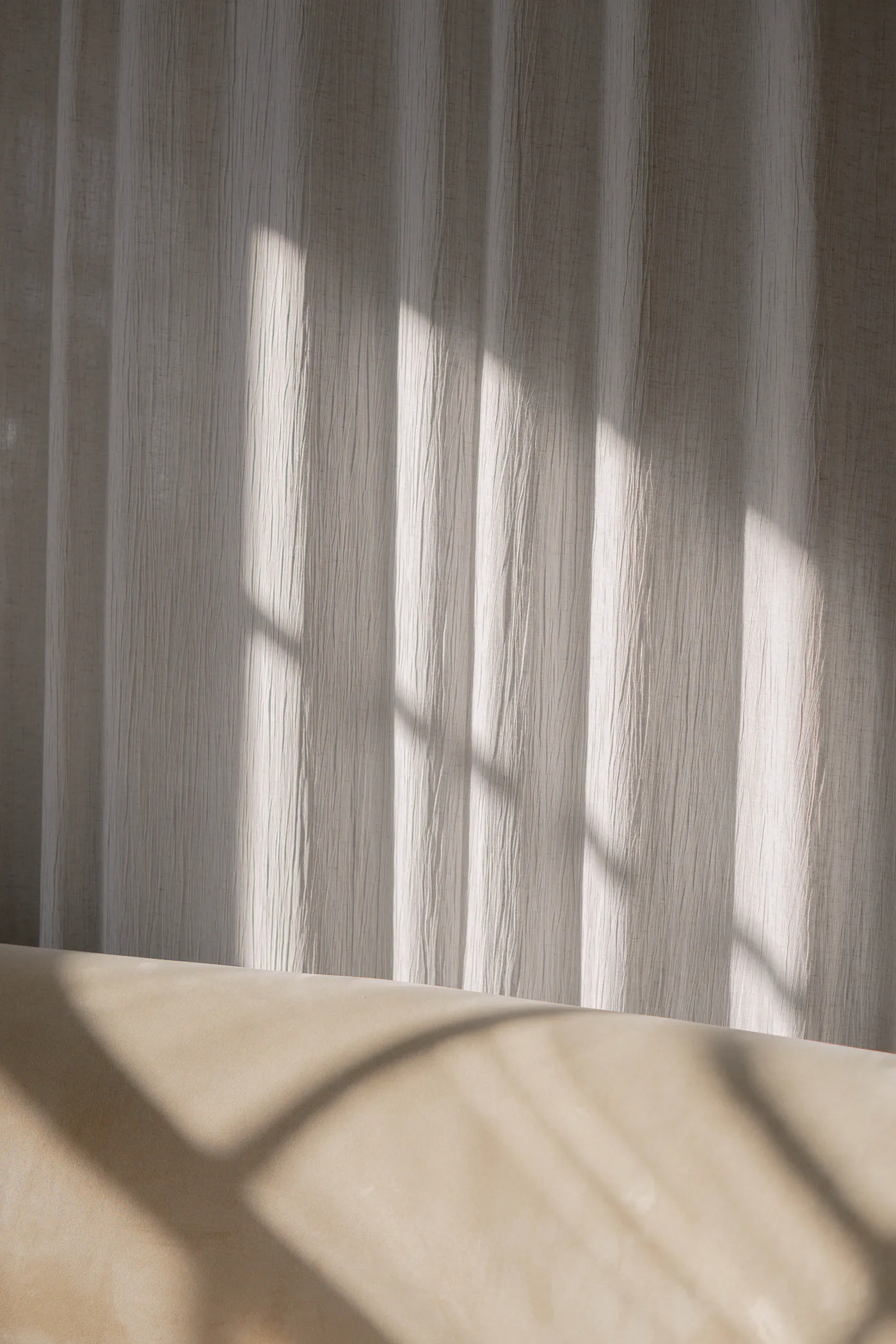
Light is the real enemy
Of everything in this article, this is the part that matters. Ultraviolet light breaks down pigment, and unlike almost every other kind of damage, fading cannot be undone. A conservator can consolidate a flaking edge or clean a grimy surface. Nobody can put a colour back.
The rule is simple: no direct sunlight on the canvas, ever. Bright indirect daylight is entirely fine and is how a painting is meant to be seen. It is the hard, defined rectangle of sun crossing a wall in the afternoon that does the harm, and here it arrives with more energy behind it than it would in most parts of the world.
There is a trap in this worth flagging, because it catches careful people. The sun moves. A wall you assessed in January, when the sun sits low and enters deep into the room, behaves completely differently in June, and the reverse is true too. Before you commit to a wall, think about where the light falls across the whole year, not just the week you hang it. Sheer curtains, solar film on the glazing, or simply choosing the wall the sun never touches all solve it.
Humidity, and why your air conditioning has already dealt with it
Canvas is fabric stretched over a wooden frame, and fabric responds to moisture. In very damp conditions it slackens and can, over long periods, invite mould. In very dry conditions it draws tight. Conservation practice puts the comfortable band at roughly 40 to 60 per cent relative humidity, held reasonably steady.
Now the reassuring part. Outdoor humidity here is genuinely high, particularly along the coast in the hot months, when it routinely sits in the seventies and eighties. But your painting does not live outdoors. It lives in a cooled interior, and air conditioning removes moisture as an unavoidable consequence of how it works. A normally occupied, normally cooled home in the UAE is usually sitting in or close to that ideal band without anyone having to think about it.
What harms a canvas is not humidity. It is change: swinging repeatedly between hot and damp and cool and dry. Stability matters far more than the number itself.
The thing almost nobody thinks about
Which brings us to the risk that is genuinely particular to life here, and it is not the weather. It is the empty property.
Plenty of homes in the Emirates sit closed for weeks at a stretch, over the summer especially, while the family travels. The cooling goes off to save on the bill, the blinds come down, and an apartment that was a stable twenty three degrees becomes an unventilated box climbing well past forty in the afternoons, cycling up and down every single day for two months. That is a harsher environment than the outdoors, and it is the one scenario in which a canvas here can genuinely suffer.
The fix costs almost nothing. If a property will be empty for a long stretch, leave the cooling running at a modest setting rather than switching it off entirely, and let some air move. If that is not possible, take the painting down and store it upright, off the floor, somewhere shaded and away from an exterior wall, rather than leaving it hanging in the heat.
Air conditioning: hang near it, not in front of it
One caveat to all that praise for cooling. Do not hang a painting directly in a vent's airflow. A canvas sitting in a constant cold draught gets a small climate all of its own, cycling in temperature every time the unit kicks in, and it receives a steady delivery of whatever dust the system is moving around the flat. A metre or two out of the direct stream is all that is needed.
By the same logic, kitchens and bathrooms are poor homes for a painting. Cooking grease travels much further than people expect and settles on any surface it reaches, and a bathroom's swings in steam are exactly the instability a canvas dislikes.
Why we varnish, and why it matters more in this climate
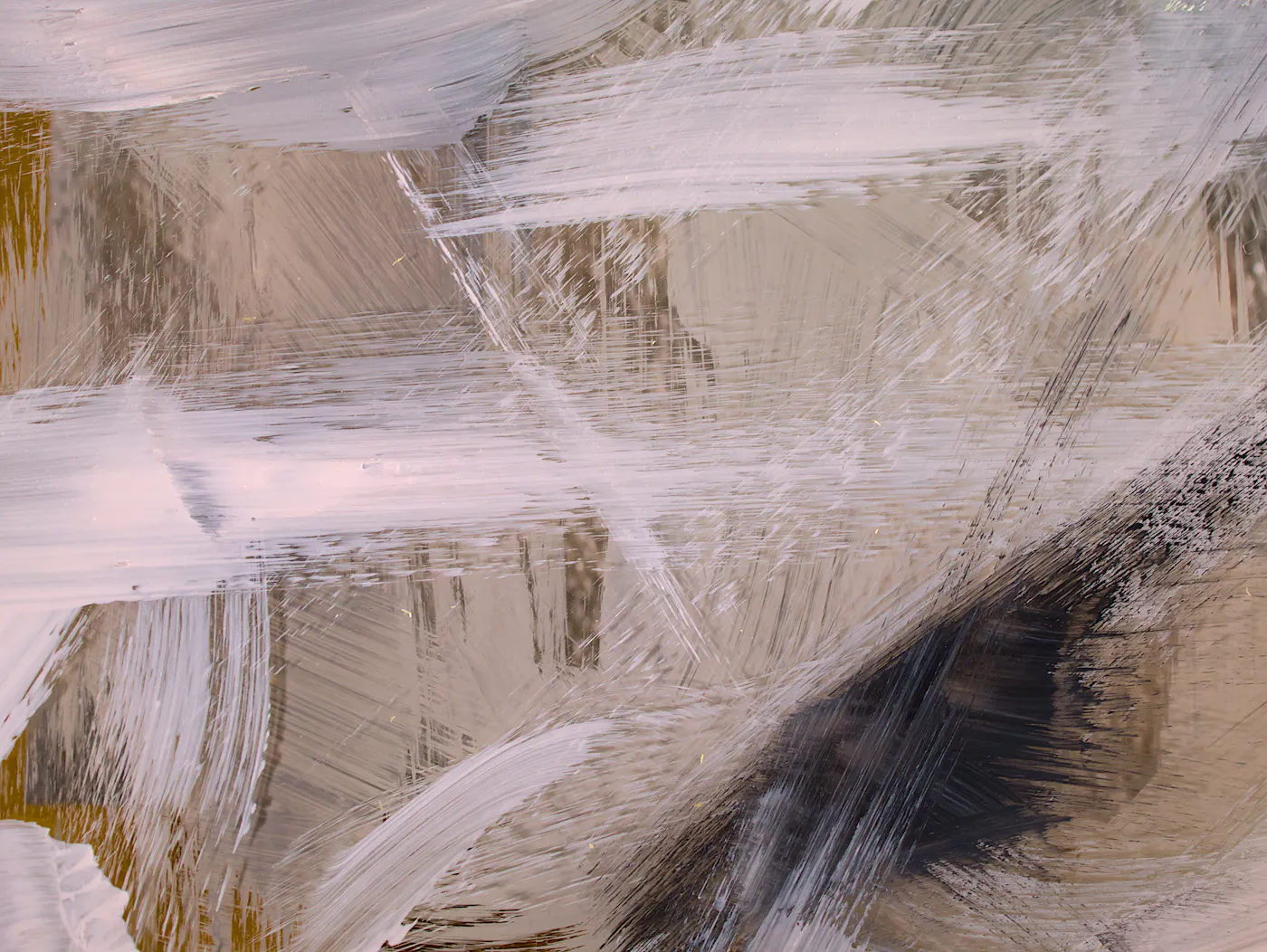
Here is a genuine property of the medium that is rarely explained to clients. Acrylic paint is thermoplastic, which means the paint film softens as it warms. A soft film is a slightly tacky one, and acrylic surfaces also carry a static charge that draws dust toward them. Warm an acrylic painting and it becomes, in a very small way, a trap for the dust in the room, which can work its way into the paint rather than resting on top of it. In a hot country, that tendency simply gets more opportunity to express itself.
This is precisely what a protective varnish is for, and why a varnish finish is part of how a commission leaves this studio. The varnish is a separate, removable layer sitting above the paint. Dust, grime and airborne kitchen residue collect in the varnish, not in the artwork. Years from now, a conservator can take that layer off, carrying the accumulated dirt with it, and lay down a fresh one, leaving the paint underneath untouched. It is the difference between a surface that can be renewed and one that cannot.
We are always careful not to overclaim about longevity, having already written at length about the fact that a good print lasts a very long time too. But this is one place where an original does have a real, practical advantage: it can be conserved. A faded print is simply reprinted, which is a different thing entirely from a painting being cared for.
Cleaning: less than you think
Dust it lightly with a clean, soft, dry brush, a wide sable or a very soft makeup brush is ideal, working gently from the top down. Every few weeks is plenty.
That is the whole method. What matters more is the list of things not to do:
- No water, no sprays, no alcohol, no damp cloth. On a softened acrylic surface a wet wipe presses dirt into the paint instead of lifting it.
- No household cleaners, and certainly nothing containing solvent. Some of them will dissolve the varnish you are relying on.
- No feather dusters, which snag on raised brushwork and on the edges of a textured surface.
- Do not touch the surface. Fingerprints on warm acrylic can become permanent. Carry a canvas by its frame or its edges, never by the painted face.
- If something serious happens, a mark, a knock, a bloom of mould, do not attempt to correct it yourself. Photograph it and ask. Amateur cleaning causes more damage to paintings than any climate.
Moving house with a painting
Most of us move fairly often here, and a move is statistically the most dangerous day in a painting's life. Carry it vertically, never flat, and never with anything resting on top of it. Protect the corners, which take almost every knock. Do not leave it in a parked car, where the interior can reach an extraordinary temperature within minutes. And when it arrives, unwrap it rather than leaving it sealed in plastic, which traps moisture against the surface.
If you are still deciding where a piece will hang, and therefore how large it should be, that decision is worth taking seriously first: we set it out in choosing the size of your portrait. And if the commission itself is still ahead of you, how a commission actually works is the place to begin.
Questions we are actually asked
Will a canvas painting survive the humidity in Dubai?
Yes, in a normally air conditioned home. Conservation guidance for paintings is a relative humidity of roughly 40 to 60 per cent with a stable temperature, and an air conditioned interior in the UAE generally sits in or near that band even when the coast outside is far more humid. What causes trouble is not humidity itself but rapid swings between extremes, which is why a closed up property with the cooling switched off through summer is the real risk rather than the climate in general.
How do I clean a hand-painted canvas?
Lightly, rarely, and dry. A clean, soft, dry brush drawn gently across the surface every few weeks is all a painting normally needs. Never use water, cleaning sprays, alcohol or a damp cloth, and avoid touching the paint with your fingers. Acrylic surfaces can soften in warmth and hold onto whatever meets them, so a wipe with a wet cloth risks pressing dirt into the paint rather than lifting it away.
Can I hang a painting opposite a large window or in a majlis with a lot of glass?
You can, as long as no direct sunlight lands on the canvas at any hour of the year. Ultraviolet light fades pigment permanently and no varnish prevents that entirely. Bright indirect daylight is not a problem and is in fact how a painting looks best. Sheer curtains, solar film on the glass or simply choosing the wall that the sun never reaches all work well, and it is worth checking the wall again in a different season, because the sun's angle moves.
Ask us about your wall
Send a photograph of where the painting will hang. We will tell you honestly whether the light, the vents and the wall are on your side.