Ask someone in the UAE about their wedding and they will not describe a single day. They will describe a sequence: the signing of the nikah, the henna night, the walima, and often more besides, spread across several evenings and sometimes several venues. Each has a different mood, a different guest list, and a different meaning. Together they are the marriage.
A photographer captures all of it, thousands of frames across the nights. But when a couple asks us which of those moments should become a painting, the question is really a good one, because these celebrations are not interchangeable. Each one holds something particular. It is worth knowing what, before you choose.
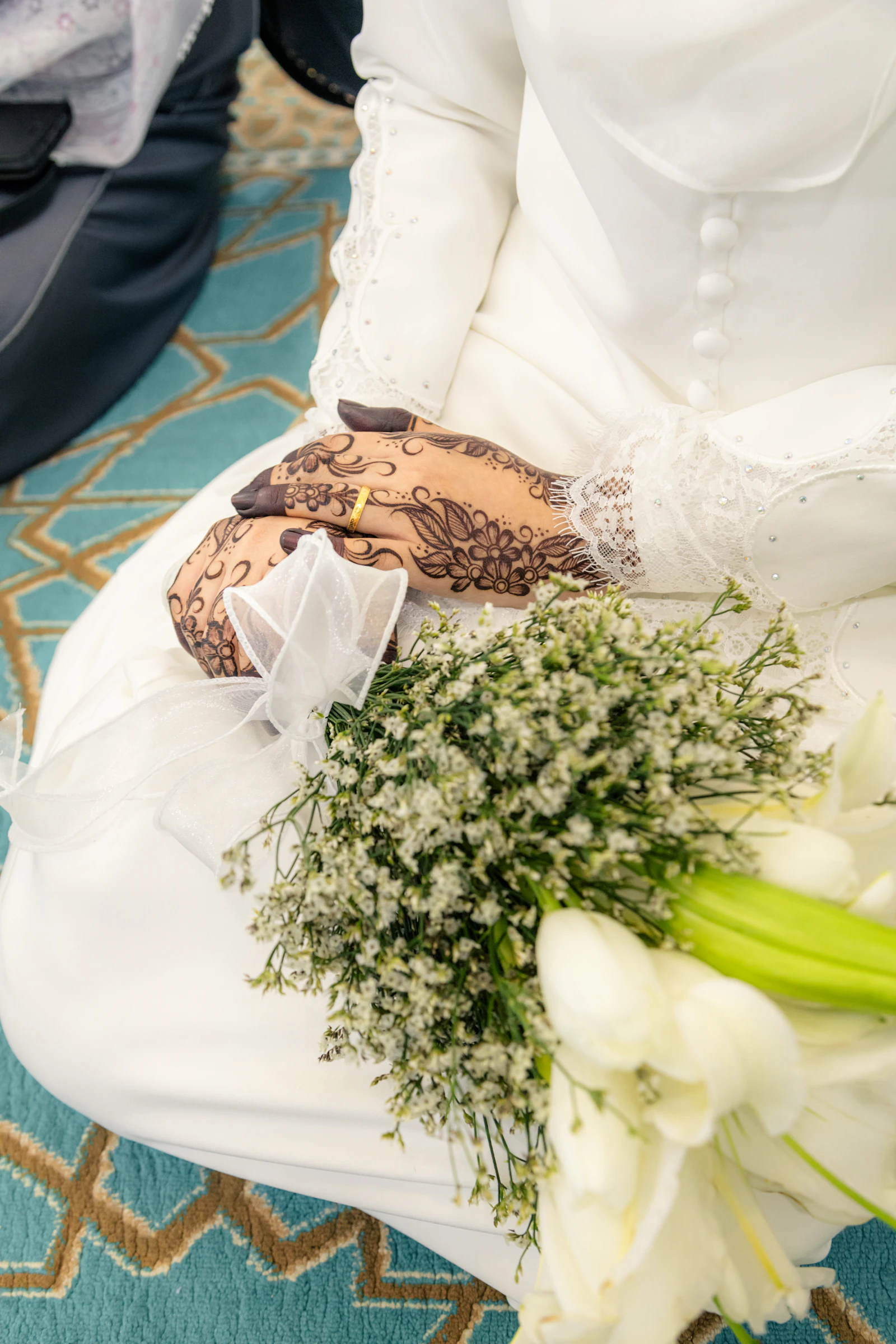
The nikah: the moment a marriage begins
The nikah is the heart of it. It is the ceremony in which the marriage is actually made: the contract agreed and witnessed, verses of the Quran recited, and the offer and acceptance, the ijab and qabul, spoken between the couple. The mahr, the gift the groom gives to the bride, is settled as part of it, a mark of commitment and respect rather than a transaction.
As a subject for a painting, the nikah has a particular quality: it is the beginning. A portrait taken from this moment is a portrait of the marriage at the instant it started, often quieter and more intimate than the celebrations that follow, the two people close together, the document nearby, the room full of family. Some couples want exactly that stillness on the wall rather than the spectacle of the party.
The henna night: colour, detail and the women's celebration
The henna night, Laylat al-Henna, usually falls a few nights before the wedding. Traditionally it is the women's celebration, the bride surrounded by her mother, sisters, aunts and friends, with music, food, and the slow, careful application of henna to the bride's hands and feet. The patterns are not only decoration. Henna is held to carry beauty, blessing and good fortune, and to offer a kind of protection as the bride crosses into a new chapter.
For a painter it is one of the richest evenings of the whole wedding. The colour is extraordinary, the henna itself, the gold, the fabrics, and the detail rewards a slow hand: the fine lacework of a mehndi pattern is exactly the kind of thing a painting can hold and a hurried photograph tends to lose. It is also, often, the most joyful and least formal of the nights, which shows in the faces.
The walima: the feast, and the announcement
The walima is the wedding feast, hosted by the groom's family, usually within a few days of the nikah. In Islamic tradition it carries real weight: it is the public announcement of the marriage, a gesture of gratitude, and an act of hospitality that gathers the wider community around the couple. It is the night of the long tables, the crowd, the generosity.
Its character as a painting is the opposite of the nikah's intimacy. The walima is scale and warmth and abundance, the couple at the centre of a room full of people who came to celebrate them. The larger canvas sizes suit it, because there is a whole scene to hold rather than a single close portrait.
Painting across the UAE's many traditions
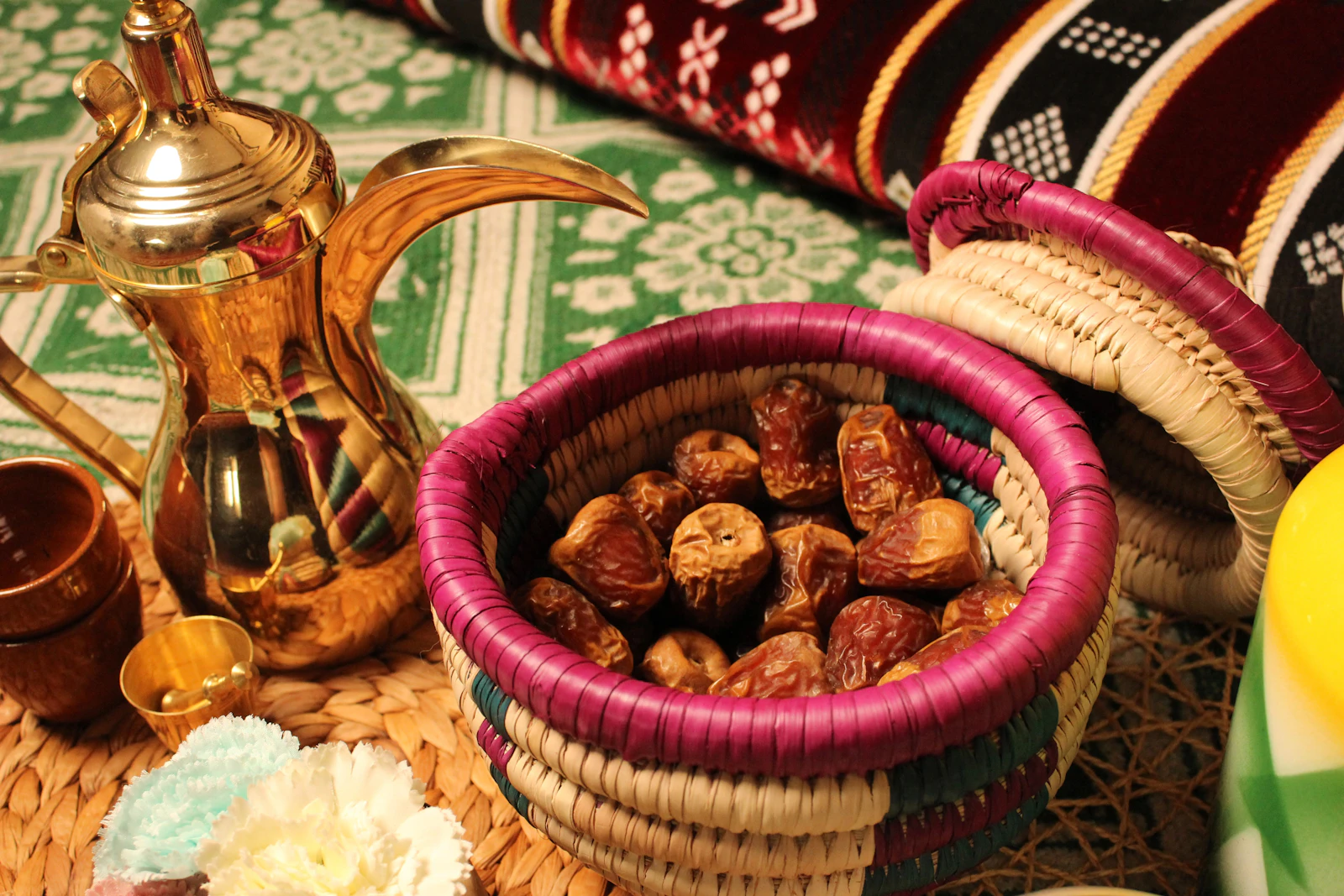
The UAE does not have one wedding culture but many, often within a single family: Emirati, and across the Gulf; South Asian, Levantine, and the traditions of every community that has made a home here. The names and the order of the celebrations shift from one to another, and we do not assume. We ask.
What stays constant is that the dress is usually where the meaning concentrates, and where a painting either earns its trust or loses it. The studio paints kandura, bisht and ghutra; abaya and gishwa; sari and lehenga; gown and tuxedo. Getting the drape of a bisht right, or the weight of gold thread in an embroidered sari, is the most demanding part of the work and the part that matters most. We wrote more about how a commission handles this in custom wedding portrait paintings in Dubai.
Which moment should you paint?
There is no single right answer, only the question of what you want on the wall. The nikah for its stillness and its meaning. The henna night for its colour, its detail and its joy. The walima for its scale and its sense of a whole community gathered. Some couples choose the moment that photographed best; others choose the one that felt most like them.
And you are not limited to one frame. Because a painting is built rather than reproduced, moments from different nights can be composed into a single piece. Choosing among your photographs is its own small art, and we set out how to do it in how to choose the photograph to turn into a painting. If you are marking an anniversary rather than a recent wedding, the same thinking applies, and we cover it in anniversary portrait paintings.
Questions we are actually asked
Do you paint traditional Emirati and South Asian wedding dress?
Yes. Kandura, bisht and ghutra; abaya and gishwa; sari and lehenga; gown and tuxedo. Traditional dress is usually the most technically demanding part of a portrait, and usually the part people most want us to get exactly right. We treat it that way.
Can you work from informal phone photographs from the night?
Yes. These moments, the henna night especially, are often captured casually, on a phone, in low light, by a relative rather than a professional. A painting interprets rather than copies, so an informal photograph is frequently all we need, as long as the faces and the key details can be read. Send it and we will tell you honestly.
Can moments from different nights be combined?
Yes. Custom composition is part of the larger commissions: the couple from the nikah, a detail from the henna, the setting of the walima, brought into one painting that no single photograph could have held.
Keep the night that mattered most
Tell us which celebration you want to hold, and send the photograph. We will tell you honestly whether it will make a painting, and what it would take.